On the edge of Dunkirk, in the small commune of Mardyck, ArcelorMittal is pouring half a billion euros into a factory that does not make beams or girders, but ultra‑thin steel destined for the guts of electric motors and transformers. The group wants this site to anchor its European comeback in a strategic material: electrical steel.
A €500 million bet on a new generation of steel
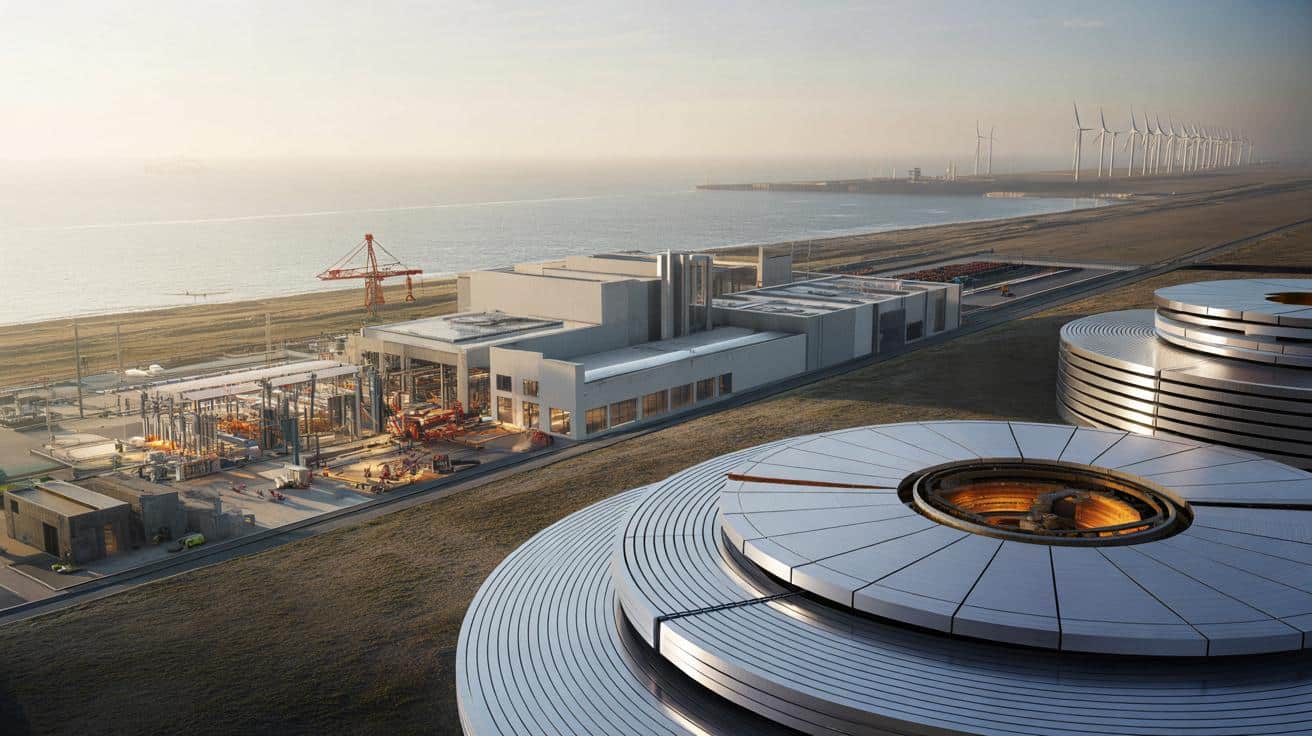
ArcelorMittal has launched a new electrical steel production line at Mardyck worth €500 million, its largest industrial investment in Europe in a decade. The project will roll out in two stages. Three production lines are due to enter service by the end of 2025, expanding to five lines by 2027.
The goal is clear: supply the metallic core of Europe’s electric motors and energy equipment, at a time when the global electrical steel market is forecast to reach around €57 billion in 2032, up from roughly €32 billion in 2023.
ArcelorMittal is concentrating its entire European electrical steel production in France, aiming to secure a slice of a booming €57 billion market by 2032.
The Mardyck project forms part of a broader strategy to move closer to European customers in automotive, wind power, industrial motors and grid equipment, while reducing reliance on imports from Asia.
From blast furnaces to magnetic precision
Who is ArcelorMittal today?
ArcelorMittal was born in 2006 from the merger of European group Arcelor and India’s Mittal Steel. Headquartered in Luxembourg, the company became the world’s largest steel producer, before being overtaken in 2020 by China’s Baowu Steel. Over the past fifteen years, ArcelorMittal has had to close uncompetitive sites, cut debt and face intense pressure from lower‑cost Asian competitors.
The Mardyck investment marks a pivot: less focus on commodity steel, more on high‑value, technology‑driven products where performance matters as much as price.
What exactly is electrical steel?
Despite the name, electrical steel does not carry electricity. It guides magnetic fields. It takes the form of very thin, carefully treated strips of steel, typically 0.2 to 0.35 millimetres thick. These strips are stacked to form the stators and rotors that sit at the heart of electric motors, generators and transformers.
Electrical steel acts like a performance amplifier: it does not create energy, but it lets machines waste far less of it.
➡️ Dieser Joghurt wird von UFC-Que Choisir angeprangert: eine echte Abzocke?
➡️ Diese eine Gewohnheit macht den Rest des Jahres leichter
➡️ Die 7 gesundheitsschädlichsten Joghurts, die Sie besser nicht essen sollten – und warum
➡️ Mit diesem simplen Kalender-Trick planst du 2026 stressfreier als je zuvor
Its key property is low magnetic loss. When magnetic fields reverse thousands of times per second inside a motor or transformer, poorly designed steel turns a lot of that energy into unwanted heat. Electrical steel, engineered with specific alloys and heat treatments, slashes those losses and boosts efficiency.
Inside the Mardyck plant: an integrated electrical steel line
Mardyck is being configured as an integrated hub where incoming coils of steel are turned into finished electrical steel products ready for motor and transformer makers.
The first phase rests on three core lines:
- a preparation line,
- a continuous annealing and coating line,
- a slitting line.
Each step has a precise role. The annealing furnace reshapes the steel’s internal microstructure to give it the right magnetic behaviour. Coating — often called varnishing — creates an insulating layer between sheets so currents do not leak from one to another. Slitting cuts the wide coils into narrow strips tailored to each customer’s design.
Towards the end of the chain, hundreds or thousands of these thin sheets are stacked or punched into shapes to build the stator and rotor. That stack is what actually guides magnetic fields as the motor or transformer runs.
Numbers behind the capacity
Once fully ramped up, Mardyck alone is set to produce 155,000 tonnes of electrical steel per year. Combined with ArcelorMittal’s site at Saint‑Chély‑d’Apcher in southern France, the group expects to reach about 295,000 tonnes of annual capacity in Europe, all produced domestically.
| Site | Product | Annual capacity (tonnes) |
|---|---|---|
| Mardyck (Nord) | Electrical steel | 155,000 |
| Saint‑Chély‑d’Apcher (Lozère) | Electrical steel | ≈140,000 |
| Total France (ArcelorMittal) | Electrical steel | ≈295,000 |
At current prices, Mardyck’s annual output could represent between €153 million and €204 million in revenue. Behind those figures sit millions of electric motors and key components for wind turbines, industrial drives and power networks.
Jobs, training and a dense construction site
Up to 400 people were involved at the peak of construction, from engineering and civil works to testing and commissioning. Over 300 external contractors took part, mixing refurbishment of older industrial halls with brand‑new buildings and utilities.
Once in operation, around 175 people already work on electrical steel across Mardyck and nearby Dunkirk. By the end of the second phase, roughly 200 staff will be dedicated to this line of business, handling operations, maintenance, quality control, energy management and digital tools.
More than 12,000 hours of training have been delivered, blending in‑house expertise with the experience of ArcelorMittal’s older electrical steel site in southern France.
ArcelorMittal has appointed department head Gaëlle Le Papillon to run the lines day to day. Teams are a mix of internal transfers and new hires, reflecting the shift from conventional rolling to a more specialist, quality‑driven process.
A strategic piece for Europe’s electric ambitions
Supporting electric vehicles and beyond
Electrical steel is often overshadowed by batteries when people talk about electric vehicles. Yet without efficient motors, EV range and performance drop sharply. Thinner, higher‑grade electrical steel reduces magnetic losses, helping cars travel further on the same battery charge.
For industrial customers, the same physics applies. Motors running conveyor belts, pumps or factory lines consume less electricity when built with high‑performance electrical steel. The gains are modest per motor, but huge when multiplied across thousands of machines and many years of operation.
The Mardyck site plugs into a growing regional ecosystem in Hauts‑de‑France, which is already home to several battery and EV projects. Local officials hope to build a nearly complete value chain, from advanced materials to vehicle assembly and grid equipment.
Backed by state strategy and France 2030
The French government has backed the project with €25 million under its France 2030 investment plan. The scheme targets sectors considered strategic for the energy transition and industrial sovereignty, including semiconductors, batteries and low‑carbon materials.
Public money covers only a fraction of the bill, but signals that electrical steel is seen as a critical technology, not just one industrial project among others.
For policymakers, securing domestic production of such materials reduces the risk of future supply shocks, especially as demand for electrification accelerates globally.
A market shaped by smart grids and massive electrification
While electric cars grab headlines, one of the strongest demand drivers for electrical steel lies in power grids. As countries plug in more wind farms, solar parks and electric heat pumps, networks need to carry more electricity while staying stable.
This shift is pushing utilities to invest in so‑called “smart grids” — systems that use sensors, automated controls and digital monitoring to manage flows in real time. Behind those buzzwords sit very tangible pieces of hardware: transformers, reactors, measuring devices and high‑efficiency motors for pumps and compressors.
Each of these devices uses electrical steel that must combine low loss with the ability to operate under variable loads and more frequent on/off cycles. As grids become the backbone of decarbonised economies, they quietly generate a long‑term, structural demand for high‑grade electrical steel.
Why thickness, losses and efficiency matter
For non‑specialists, the obsession with 0.2 mm versus 0.35 mm sheet thickness might sound like hair‑splitting. In practice, it affects how much energy an electric car or a wind turbine wastes.
- Thinner sheets reduce eddy current losses, a form of waste heat created when magnetic fields change rapidly.
- Better coatings prevent currents from leaking between layers, further cutting losses.
- Optimised alloys and heat treatments reduce hysteresis losses — another source of inefficiency when fields reverse.
Combine these effects and the energy savings become substantial. For a fleet of electric vehicles, a few percentage points of extra efficiency can mean fewer charging stations, smaller batteries or lower electricity bills for drivers.
Risks, trade‑offs and what could come next
ArcelorMittal’s bet is not risk‑free. The company is locking hundreds of millions into a technology linked to electrification scenarios that assume strong policy support and steady economic growth. Delays in EV adoption, grid upgrades or renewable projects could slow demand and lengthen the payback period.
Competition is intense as well. Asian producers, particularly in Japan, South Korea and China, have built deep expertise in electrical steel and are also expanding capacity. Pricing pressure is likely, especially on lower grades. That pushes European players toward higher‑performance segments where quality and local supply security justify a premium.
For readers trying to make sense of these shifts, electrical steel can be seen as one layer in a stack of technologies enabling net‑zero targets. On top sit electric vehicles, heat pumps and industrial electrification. Underneath are smart grids. Beneath that, materials such as copper, silicon carbide — and electrical steel. Bottlenecks at any of these layers can slow the entire transition, which explains why a plant in a northern French town now carries European‑level expectations.