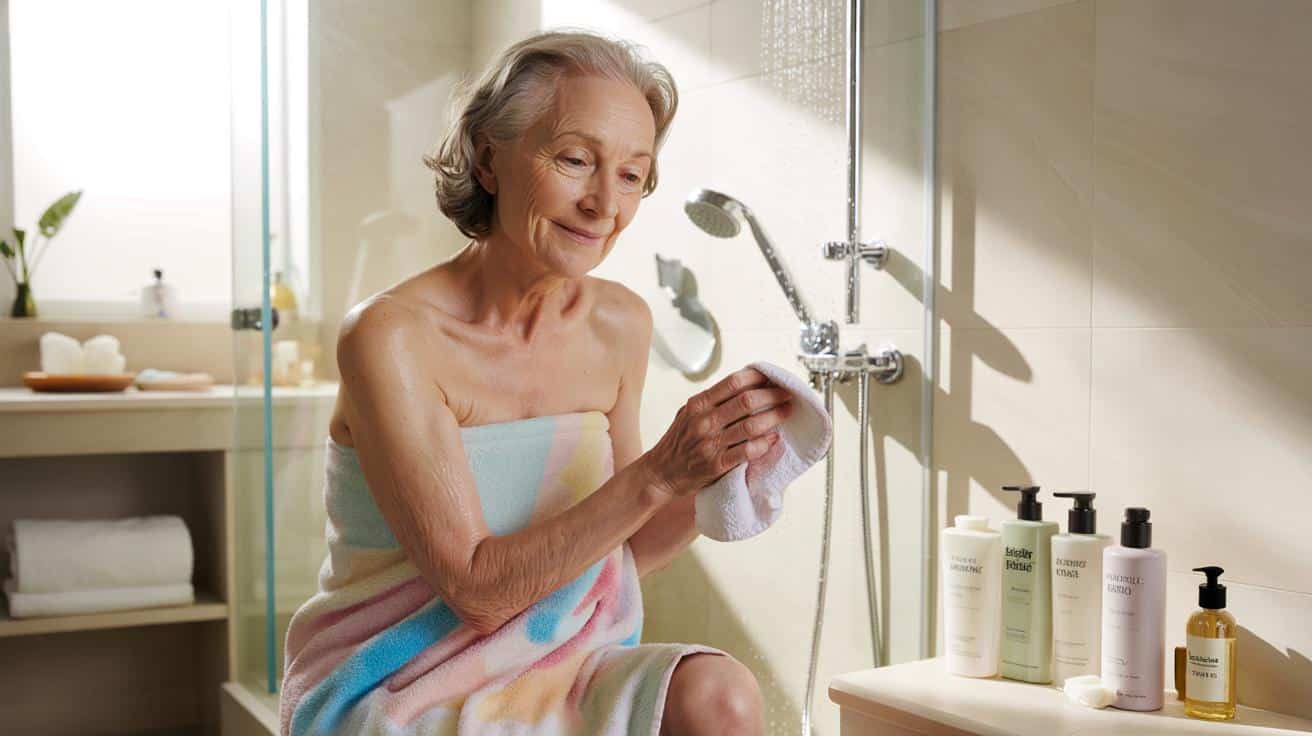
Dermatologists are now questioning long‑held habits, suggesting that older adults may need fewer full showers than they think, and a more strategic approach to staying clean and comfortable.
How often should people over 65 actually shower?
French dermatologist Dr Marie‑Estelle Roux, whose work has been widely cited in European health media, joins many experts in saying a daily full-body shower is usually unnecessary for seniors.
For most people over 65, two to three showers a week are enough, as long as daily targeted washing is maintained.
Her advice focuses on context: climate, physical activity, health status and mobility all matter. An active 70‑year‑old who walks or does exercise every day will not have the same needs as a 82‑year‑old with limited mobility who spends most of the day indoors.
Ageing skin is naturally drier. Oil production slows. The protective barrier that keeps moisture in and irritants out becomes less efficient. Frequent hot showers with strong soap strip away what’s left of those natural oils.
That can trigger:
- more dryness and tightness
- itching and redness
- small cracks in the skin
- a higher risk of skin infections
This is why many dermatologists now argue that adjusting frequency is part of basic prevention, not a sign of neglect.
Why “less showering” does not mean “less hygiene”
Showering and hygiene are not the same thing. You can shower less often and still keep an excellent level of cleanliness.
The key for seniors is daily hygiene of key zones, plus two or three full showers a week with gentle products.
➡️ Alarm wegen tödlicher Airbags: Wenn Sie eines dieser 224 Modelle fahren, sofort anhalten
➡️ Kein Natron, kein Essig: Dieser Trick macht die Gummidichtung der Waschmaschine wie neu
➡️ Wie du die perfekte Einkaufsliste erstellst, die Stress reduziert und Geld spart
➡️ Chronische lymphatische Leukämie: Typische Symptome der Altersleukämie
➡️ Diese unterschätzte Routine verbessert Fokus ganz ohne Aufwand
➡️ Schluss mit Reif: die einfache und wirksame Methode, um Ihren Gefrierschrank sauber zu halten
➡️ Diese Methode hilft, Motivation im Alltag zu steigern, indem du Ziele sichtbar machst
Areas that need daily attention, even without a full shower, include:
- armpits
- genital area
- buttocks
- feet and between the toes
- neck and behind the ears
- face
This “targeted wash” can be done at the sink with a flannel or washcloth, a soft sponge, or specially designed gentle wipes. For many older adults who struggle with balance or who fear falls in the shower, this approach also reduces risk.
When daily showers still make sense
Of course, some seniors genuinely need more frequent showers. A retiree who swims every morning, works in the garden, or lives in a hot, humid region will likely feel better and more comfortable showering daily.
The nuance, according to specialists, is to adapt the rest of the routine. That means shorter showers, lukewarm rather than hot water, and mild cleansers instead of harsh soaps. In that case, the “risk” comes less from the frequency itself than from the way the shower is taken.
The right shower routine for ageing skin
Once the question of “how often” is settled, another one arises: how should seniors shower when they do step under the water?
Gentle, quick, lukewarm and moisturising: those four words sum up the ideal shower for over‑65s.
Dermatologists usually suggest the following structure:
| Step | Recommendation for over‑65s |
|---|---|
| Water temperature | Lukewarm, not hot, to protect natural oils |
| Duration | Ideally 5–10 minutes |
| Cleanser | Soap‑free, pH‑neutral, formulated for dry or mature skin |
| Technique | No aggressive scrubbing; gentle hand or soft cloth |
| Drying | Pat the skin dry rather than rubbing |
| Aftercare | Apply moisturiser or body oil on slightly damp skin |
Choosing the best shower products after 65
The product on the shower shelf matters as much as the frequency. Classic bar soaps and heavily perfumed shower gels tend to be quite stripping, especially for older skin.
Dermatologists often recommend:
- shower gels labelled for “dry” or “mature” skin
- soap‑free washes with a neutral or slightly acidic pH
- cleansers enriched with plant oils such as sweet almond, argan or jojoba
- fragrance‑free or low‑fragrance options for sensitive skin
Cleansing oils are getting particular praise. When they touch water, they turn into a light emulsion that washes the skin without leaving it squeaky and tight. For someone who already struggles with dry, flaky legs or arms, this can make a big difference in comfort.
After the shower, the way you dry off also plays a role. Rubbing vigorously with a towel works a bit like sandpaper on thin skin. Gently patting the body dry, especially on the shins, arms and chest, keeps the outer layer more intact.
Hydrating within three minutes of stepping out of the shower helps trap moisture and support the skin barrier.
Balancing skin health, dignity and everyday life
Behind the question of shower frequency lies something more personal: dignity, habits formed over decades, and cultural expectations about being “clean”. Many older people feel that skipping the daily shower means letting themselves go.
Health professionals tend to frame the change differently. They see it as adapting to a new body that has different needs, just as we adapt diet or exercise with age.
For carers and family members, this nuance can be helpful. Instead of insisting on a daily shower for an elderly parent who is scared of slipping, agreeing on two showers a week plus a daily targeted wash can protect both skin and self‑esteem.
Practical scenarios for different lifestyles
To make this more concrete, here are a few typical patterns specialists might suggest.
- Active and sporty 68‑year‑old: short daily shower after exercise, lukewarm water, mild gel, moisturizer each time.
- Home‑based 79‑year‑old with dry skin: two showers a week, daily wash at the sink of key areas, rich body lotion on legs and arms.
- 85‑year‑old with reduced mobility: assisted shower once or twice a week, plus daily wipe‑down of intimate areas, armpits and feet by a carer.
None of these patterns are “dirty”. They are simply adjusted to each person’s reality, while keeping an eye on skin comfort and infection risk.
Hidden risks of over‑washing for seniors
Dry, cracked skin is not just a cosmetic issue. Tiny fissures can act as doors for bacteria and fungi. In older adults with diabetes, poor circulation or on certain medications, those small breaks in the skin can be the starting point for more serious problems.
Fragile skin that is constantly stripped of oils becomes more vulnerable to infections, itching and sleep disturbance.
Itching in particular is often underestimated. Persistent itch leads to scratching, which leads to further damage and a vicious cycle of discomfort. Some seniors then sleep badly, feel more tired and less steady on their feet, which increases fall risk.
By softening the shower routine and supporting the skin barrier, many of these spirals can be prevented early.
Beyond showers: small habits that protect ageing skin
Shower timing is just one part of the story. Other simple habits can boost the effect of a gentler routine:
- using a humidifier in very dry indoor air
- wearing cotton or breathable fabrics close to the skin
- avoiding very hot baths which “cook” the skin lipids
- drinking enough fluids during the day
- checking the skin regularly for new rashes, sores or colour changes
For families, a quiet weekly “skin check” with an older relative can be useful. Looking at heels, between the toes, under the breasts, in skin folds and on the back of the legs may reveal early problems: pressure sores, fungal infections or eczema patches that the person has not mentioned.
Adjusting shower frequency, choosing the right products and paying attention to dry areas is not about being fussy. It is a straightforward, low‑cost way for over‑65s to stay comfortable, maintain confidence and support their health day after day.